PRELIMINARY RESULTS OF THE 2016 IUP ARCHAEOLOGICAL FIELD SCHOOL AT THE SQUIRREL HILL SITE

By Lara Homsey-Messer

From May 16 to June 17th, 10 students from IUP and 2 students from Clarion University ventured to the Squirrel Hill site in New Florence, PA, to learn archaeological field techniques, including excavation methods, shovel testing, and using high-tech equipment such as a total station and ground penetrating radar.

SquirrelHill1bClockwise from upper left, students practicing test unit excavation,
ground penetrating radar survey, using a compass, and using a total station.

Perhaps the most humorous aspect of this site is the feeling that you are on the set of LOST and that something might come crashing out of the bamboo jungle at any minute…well, technically it is Japanese Knotwood, but it sure looks like bamboo and is clearly where the phrase “grows like weeds” comes from. These hardy students braved not only the bamboo (as we lovingly called it), but also a six-day work week (yep, Monday through Saturday folks), a gypsy moth caterpillar infestation (it’s hard to keep a unit floor clean with these buggers falling in every other second), more than one drenching storm (being dry and clean is totally overrated…), and all sorts of critters running amuck in our test units (we miss our resident mouse in Test Unit 2).

SquirrelHill2Representative pics of the “bamboo” (top), an impending mid-afternoon storm,
and our cute resident mouse.

Seriously, though, these students learned a lot about not just archaeology over these five weeks, but also the Monongahela folks who lived in this village over five centuries ago. Squirrel Hill has been known to archaeologists since the 1950s, and has been heavily collected by local residents for decades. The site is currently listed on the National Register of Historic Places and the land it sits on is now owned by the Archaeological Conservancy. The site is believed to be a Johnston-phase Monongahela village (ca. 1450-1590). Very little systematic study has been conducted at the site, so many questions remain to be answered, including its occupation and cultural affiliations; location & extent of site boundaries; the internal arrangement of houses, plaza, and stockades; and its relationship with neighboring communities such as the Johnston Site, the location of previous IUP field schools.

This summer we opened 10, 1 x1 meter, test units in areas that previous geophysical survey identified as “hotspots.” We also conducted additional ground penetrating radar survey and shovel-tested around the Conservancy’s property line. We found pottery, lithic flakes, a LOT of fire-cracked rock, and over 80 features (such as post molds and storage pits). Perhaps most intriguing, we now suspect that there may be more than the one, Johnston-phase, occupation at the site. Many of the post molds intersect and intrude other features, minimally suggesting some rebuilding. Interestingly, we discovered several features (including a large rock cluster), nearly a meter below the surface. Fortunately, we were able to collect charcoal from them for radiocarbon dating; it will be very interesting to see if these enigmatic features are contemporaneous with, or pre-date, the Mon occupation. We hope to have these dates before the end of the calendar year, so check back if you want to find out the results…

SquirrelHill3Rock cluster feature nearly a meter below surface (left)
and two possible egg-shaped, post-enclosed storage pits (right).

Many thanks to the folks who visited us this summer and offered their expertise, volunteer labor, support, and enthusiasm. Special thanks to Bill Johnson for sharing his knowledge of Mon ceramics, Sarah Neusius and Bev Chiarulli for expertise on Mon culture, and Dr. and Mrs. Driscoll for their support of IUP Archaeology. Your visits made our day!
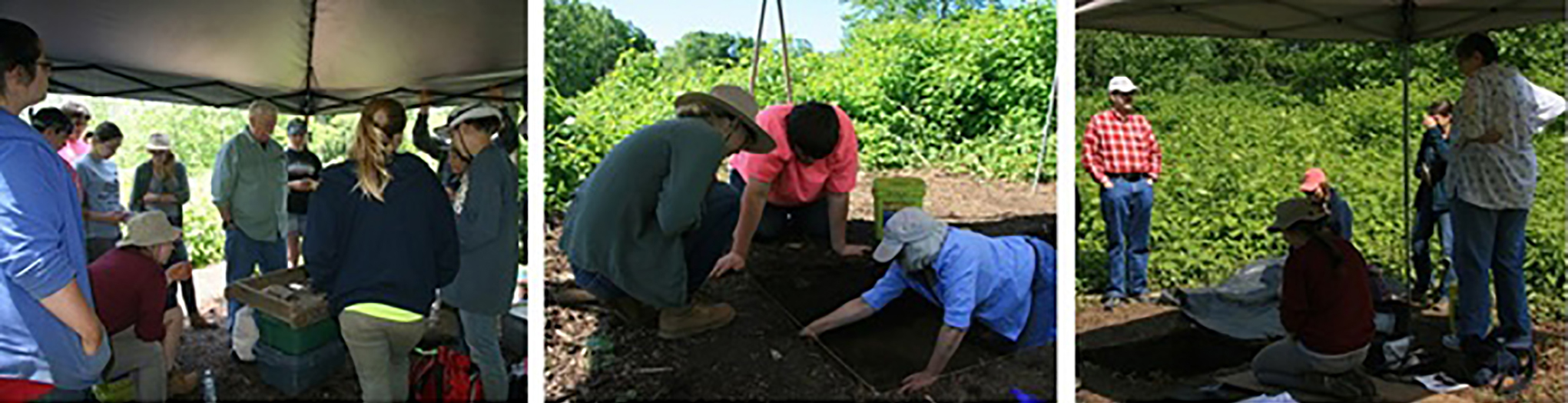
SquirrelHill4From left to right: Dr. Bill Johnson giving an impromptu lesson on Mon ceramics, Dr. Sarah Neusius giving students excavation tips, and Dr. and Mrs. Driscoll chatting with students.
Underwater Archaeology and the Pennsylvania Archaeology Shipwreck Survey Team

IUP is pretty well landlocked, but that doesn’t mean that we can’t take our archaeology underwater. Last weekend I taught an underwater archaeological wreck survey course at Erie, PA. The course was organized through the Pennsylvania Archaeology Shipwreck Survey Team (PASST) and sponsored by the Regional Science Consortium, Pennsylvania Sea Grant, Divers World dive shop, and Erie Maritime Museum.

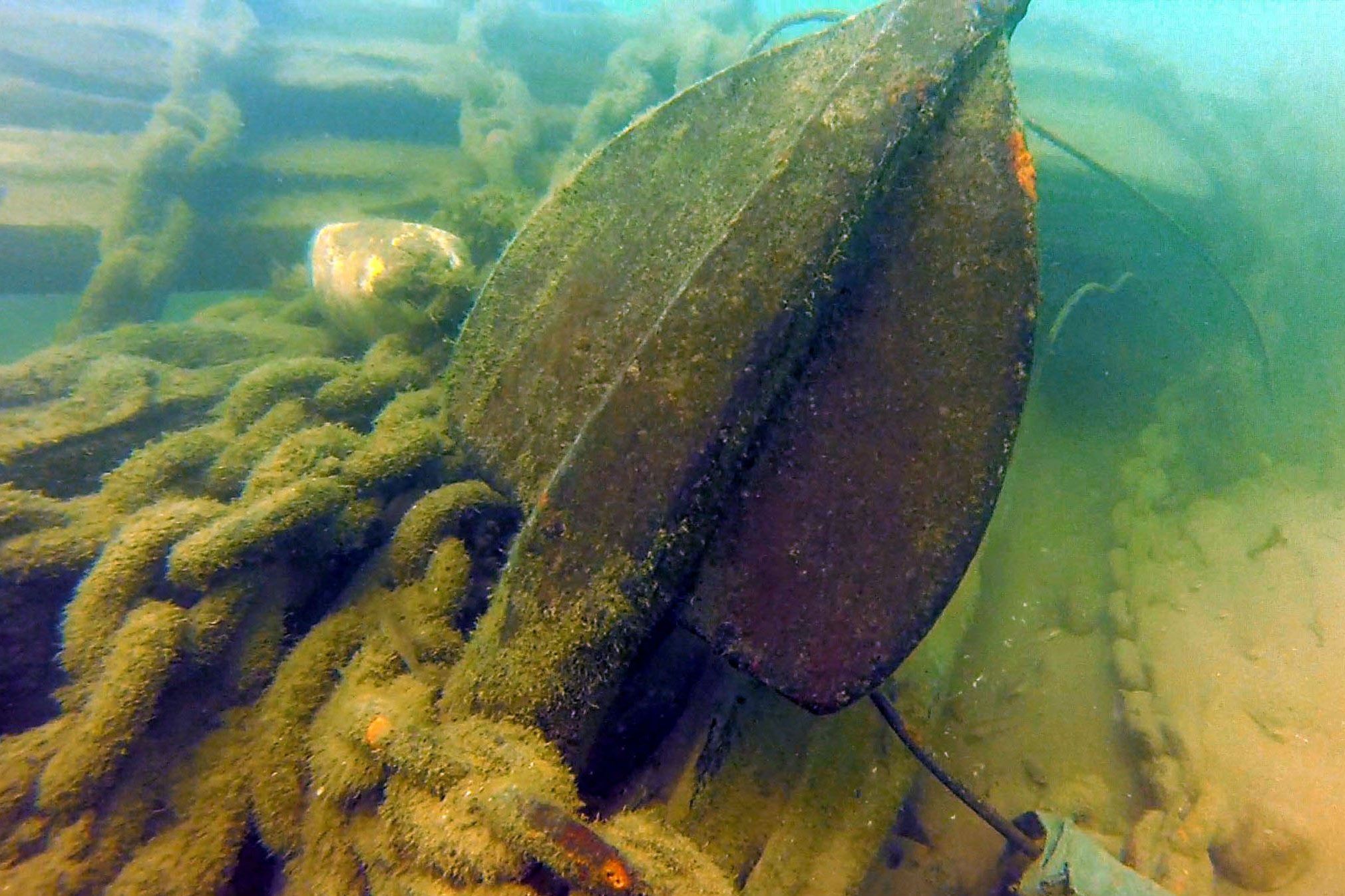
wreck-erie-1Shipwreck off of Presque Isle, Erie, PA (Courtesy of PASST)


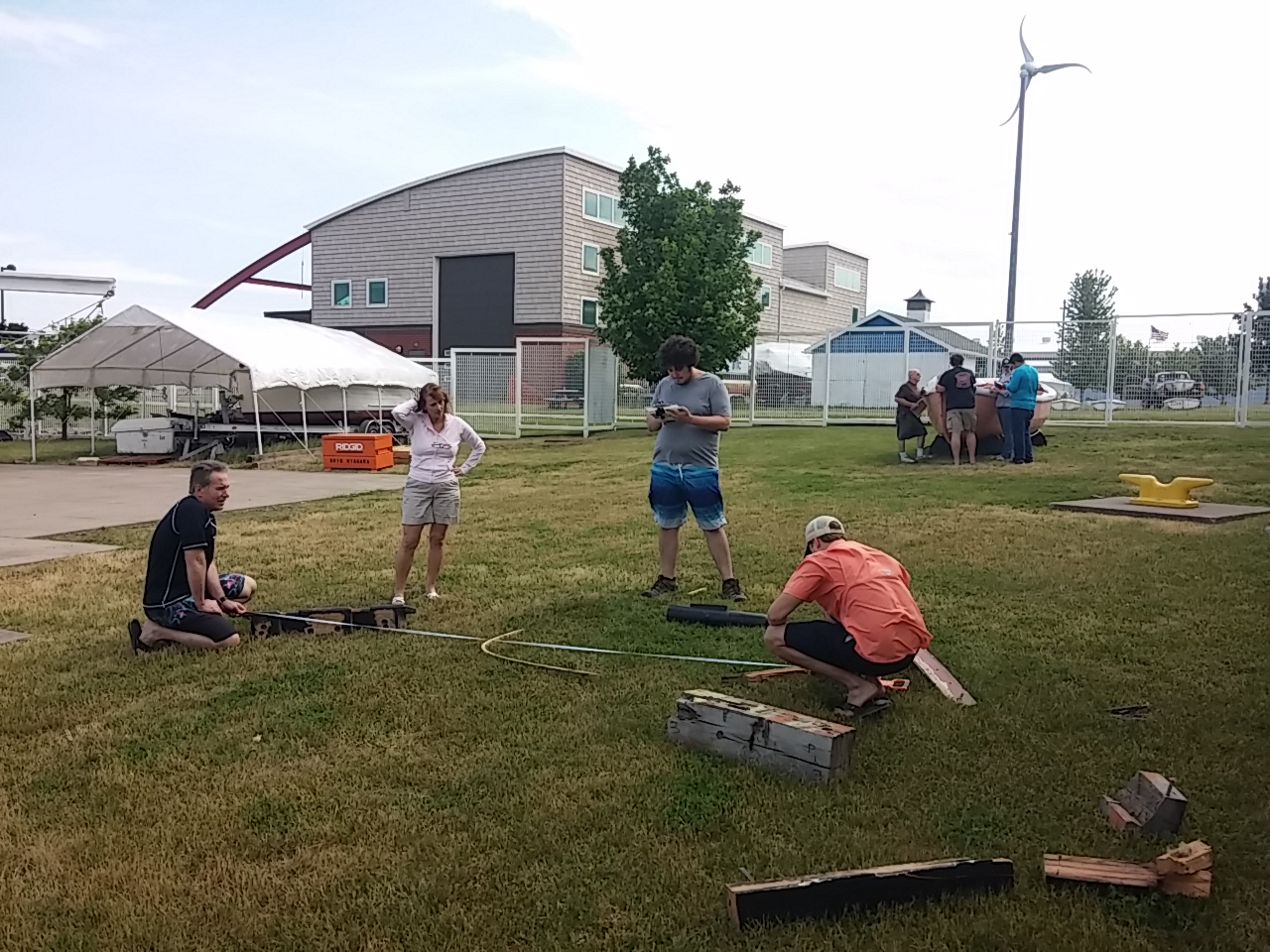
From Friday night through Sunday afternoon, 15 students learned the basics of underwater archaeological recording. We started Friday evening with a lecture on maritime archaeology, archaeological ethics, and how to accurately record an archaeological site underwater (lots of trilateration!). Saturday morning we met at the Erie Maritime Museum to practice these skills using items from their collections. Teams of four recorded a lifeboat, the deadwood of a large vessel, and two mock debris fields. In the afternoon we took these skills to the pool. Working with the same teams, the class recorded PVC structures, ladders, and other items on the pool bottom. The materials were not archaeological but the skills were. Everyone learned that pulling a tape and communicating locations and measurements got a lot harder without gravity and the ability to speak. On Sunday morning we travelled to Dinardo’s in Grove City to take the training to the real world. This time the teams did two dives to record two intentionally sunk vessels and a motorcycle while dealing with limited visibility, a silty bottom, and the bulky suits and gloves that come with diving in chilly water. Everyone did an excellent job throughout the weekend! The importance of preplanning and communication became increasingly apparent as did the slow and meticulous nature of archaeology – dreams of recording a shipwreck in one dive disappeared like bubbles from a regulator. Everyone also gained an appreciation for what can be learned by studying a shipwreck and it caused them to think more carefully about sites that they have dived dozens of times.

0611160955a 0611161014b 0611161025b0611161313

Practicing at the Erie Maritime Museum and in the pool. Nice plumb bob work in the bottom left image.

Having completed the course all of the participants now have the privilege of diving on PASST projects. PASST was founded in 2013 by representatives of the Regional Science Consortium, Flagship Niagara League, Indiana University of PA, PA DCNR, PA DEP, PA Historical Museum Commission, PA Sea Grant, S.O.N.S. of Lake Erie, and the local diving community with the goal of preserving and promoting the maritime heritage of Pennsylvania’s portion of Lake Erie. Drawing on educators, historians, divers, and archaeologists PASST is dedicated to the documentation, scientific study, and educational promotion of Pennsylvania’s underwater archeological resources. As part of this mission, PASST organizes divers to document shipwrecks in Lake Erie. PASST-trained divers have the skills ethical orientation to participate in those efforts.

0612160843 0612160842

Divers entering Dinardo’s Quarry for the open water portion of the course. The water was a balmy 65 degrees above the thermocline.

These dives will be happening throughout the summer, and next, and the one after that… there are a lot of shipwrecks to record. Another underwater archaeological wreck survey course is planned for next summer. This is not strictly an IUP course, but it is open to IUP students who have an Advanced diving certification and an interest in archaeology. The class is also a way foPASST-final-logor us to engage the general public in recording and preserving the history of the Commonwealth.

Thanks to Matt Dickey, Jeanette Schnars, David Boughton, and Joe Lengieza for making the class a success.

On Tour with the Society for Pennsylvania Archaeology

by Dr. Sarah Neusius

Next to excavation one of the most fun things for an archaeologist to do is go visit someone else’ site and look at their artifacts. Between June 2 and 5, Dr. Phil and I got to do just that when I co-led the 2016 Society for Pennsylvania Archaeology (SPA) field trip with Dr. John Nass of California University of Pennsylvania. This year we went to see the archaeology going on in Virginia at places like Mt Vernon, Montpelier, and Monticello with a group of 20 professional and avocational archaeologists.

We started in Bedford, PA where we had evening orientation which covered the estates we would be visiting and cool facts about the four early US Presidents’ who had homes in Virginia: Washington, Jefferson, Madison and Monroe. Then we loaded into vans and headed south to Virginia early Friday morning.

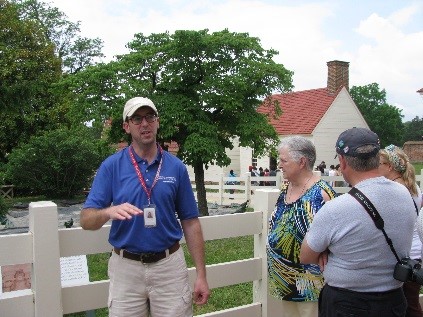
On Friday we battled DC traffic to get to Mount Vernon where we had a tour of the house and then a tour by Dr. Luke Pecoraro, Director of Archaeology. He took us around the grounds and included visits to the locations of several excavations as well as to the archaeology laboratory. One interesting thing is that grave locations at the current excavation of the slave cemetery are being exposed but not excavated, and regardless, the prehistoric artifacts that have been recovered indicate that there is a Late Archaic site at this same spot. We also learned that there are lots of student and volunteer opportunities to get involved with Mt. Vernon archaeology that we can share with IUP students.

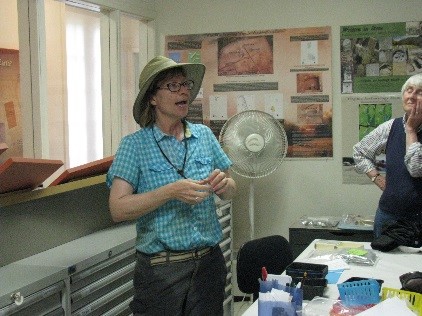
Later Friday afternoon we visited Washington’s boyhood home where archaeologists with the George Washington Foundation including Dr. Dave Muraca and Laura Galke gave us tours of the site and the lab. Unfortunately we got caught in a downpour while viewing the excavations and the foundations for the house now being reconstructed. However, the staff was very nice to let us drip into the lab anyway and look at some of the many artifacts (men’s wig curlers, a masonic pipe and much more!), which they have recovered because of their thorough excavations.

In the evening we had a lecture by Dr. Doug Owsley from the Smithsonian Institution who talked about his forensic studies of early burials found at St. Mary’s City and Jamestown. Though a century earlier than the rest of this field trip’s explorations, Dr. Owsley’s recent work on these burials is fascinating and cutting edge!

Sarah middenGaulke

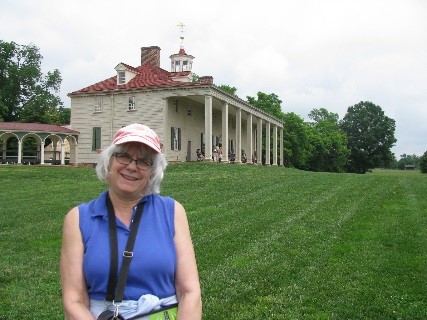
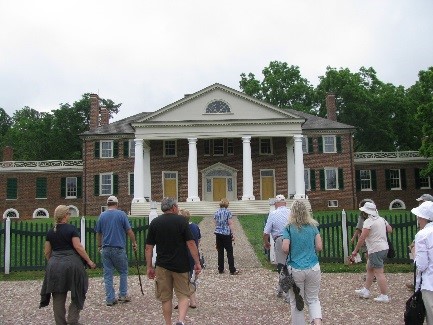
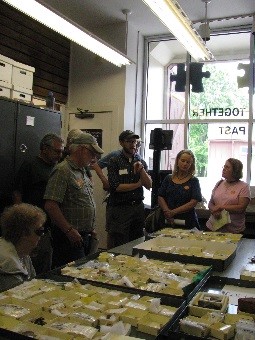
Friday pictures: Here I am on tour at Mt Vernon; Dr. Pecararo explaining findings at Mount Vernon’s South midden; Laura Galke discussing the many men’s wig curlers found at Ferry Farm.

On Saturday we had another packed day visiting Madison’s Montpelier before going to Jefferson’s home at Monticello, both of which are historic sites near Charlottesville. Madison may be less well known than other presidents, but our fourth President was a complicated man responsible for the division of our government into three branches, our leader in the War of 1812, and of course, husband to Dolley Madison. Together they may have been our nation’s first “power couple”! The archaeology at Montpelier, which we learned about from Stephanie Hallinan, Director of Public Archaeology, is also interesting. At the moment, Montpelier archaeologists are focusing on homes of the enslaved population, especially the domestic slaves and skilled craftsmen who were housed close to the Montpelier mansion.

We had so much fun at Montpelier that we were late getting to Monticello and had to switch our house tour to the end of the afternoon. This meant that Dr. Fraser Neiman, Director of Archaeology, took us on our landscape archaeology tour first. During this tour we hiked the hill at Monticello learning how the use of the land changed when the plantation switched from tobacco production to wheat farming and how this apparently affected the social relationships of everyone living there from owners to overseers to slaves. When it came time to tour the house, the guides actually made us take off our shoes, which were encrusted with Monticello’s red clay from our hike through the woods! So I can say I have been in Thomas Jefferson’s home barefoot!

Saturday evening we heard a lecture by Kyle Edwards, UVA Ph.D. student who is doing his dissertation on Monroe’s home at Highland, which is also near Charlotte. The most recent development is that new archaeological work there shows Monroe did have a substantial house at Highland. Even though the interpretation for many years has been that he only had a small, cabin-sized house, that structure is now believed to have been a guest house. Archaeology has debunked another historical myth!

Hallinan Montpellier Neiman

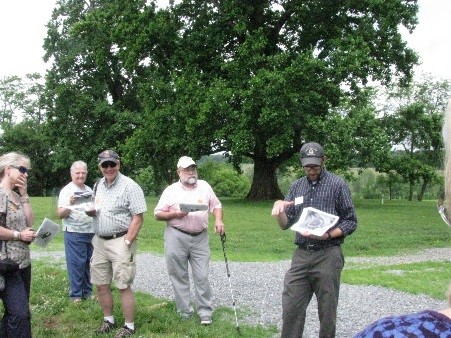
Saturday pictures: Stephanie Hallinan explaining the excavations and slave cabin reconstructions underway at Montpelier; Our group approaching the house at Montpelier; Dr. Neiman (far right) explaining the excavations Monticello Archaeology has been doing in the woods downslope from the house at Monticello.

Sunday was our last day, but we drove south again so as not to miss Jefferson’s retreat at Poplar Forest. One of the interesting things about Poplar Forest is that the reconstruction, which has been heavily driven by archaeology, is still underway so one can really see how the staff is working to reconstruct this place accurately. The house tour was full of stories about people like the master craftsman, a slave, who made the friezes and other trim to Jefferson’s specifications. Then, Dr. Jack Gary, Director of Archaeology led us on a tour explaining how they are reconstructing the landscape using archaeology to find details like the spacing of ornamental trees. I hadn’t thought the reconstructing a landscape could be so fascinating, but it was another testament to what we can learn from modern archaeology. Beside that Poplar Forest is a special place, still remote and relatively unknown, which everyone interested in archaeology, historic preservation, and/or Jefferson should visit.

After Poplar Forest we had a long ride back to Bedford before dispersing in the evening for our various homes, but this gave us lots of time to debrief and talk about our experiences. It was another great SPA field trip! Keep in mind that the SPA will be doing similar trips early each June and you might like to join us on one. You might even consider joining the SPA in order to take advantage of this and other member benefits which include the Pennsylvania Archaeologist, one of the longest running state archaeology journals in the country. At just $18 for students and $25 for non-students or $30 for families, membership is a great bargain. For details on joining see www.pennsylvaniaarchaeology.com). Then stay tuned for word on plans for another memorable trip next June!

Gary Lab Poplar Forrest

Sunday pictures: Dr. Gary giving the archaeology tour to our group including Dr. Phil with original Jefferson era trees in the background; Our group in the lab at Poplar Forest; View of the octagonal house, sometimes considered Jefferson’s masterpiece, during the SPA tour.

Whole Lotta Archaeology Goin’ On

Summer 2016 is a busy time for IUP Archaeology! We have at least 10 active field projects involving more than 25 students, as well as several laboratory projects running throughout the summer. These projects offer students unparalleled opportunities to learn archaeological skills in a wide variety of contexts, and in some cases to make a little money. These are also ‘real’ projects in that they are designed to contribute to our understanding of past humans’ lives and are part of faculty and graduate student research programs.

IMG_7093Throughout the summer we will highlight some of the projects taking place at IUP. We’ll try to have a new blog post once a week all summer so check back regularly.


IMG_4565A taste of what’s to come:

Initial results from the IUP Archaeology Field School at the Late Prehistoric Squirrel Hill site

Reports from National Park Service funded work at Fort Necessity National Battlefield

Underwater archaeology training in Lake Erie

Updates from the Pennsylvania Highway Archaeology Survey Team (PHAST)

Stories from the Johnston Site, Historic Hanna’s Town, and the NSF Faunal Analysis Working Group

Check back soon!

IMG_6542

Questions From The PennDOT Highway Archaeological Survey Team (PHAST) Lab: Report Writing Angst

IMG_1784[1]

I dig by a deer carcass. I contemplate death.

This past summer, I had the opportunity to take a paid internship working on the PHAST crew. The internship is available through a partnership between IUP and PennDOT.  I worked as a tech on a crew of 4 – we cruised around the state digging holes for small projects (mostly bridge replacement projects), met a bunch of the district archaeologists, helped out with the Byways conference this past July in Philly and learned and networked like crazy – a great opportunity for experience with CRM working on projects from start to finish.  Now that the fieldwork part of PHAST is over and I’m crying into my keyboard, a few questions have been popping up again and again as we work through report writing.  Things like:


“Why are we calling this trash a site?”


“Why does this site have three different names?”


“Sooo, a multi-component site can be completely separate sites horizontally as long as they cover at least one point vertically? Even if they have separate living surfaces?! WHYYY??!!!”


Ok, the second question was partly my fault – Apparently the whole crew started making up their own names for a site partway through excavation. Luckily we all had the sense to keep the State Route (SR) number the same… And we worked on small enough projects this summer that it wasn’t disastrous.  Still, it was enough to remind us how important it is to take care in writing site info on your artifact bags.


But, sites can sometimes have different names – or at least different survey or report names for separate investigations. This can be confusing when conducting background research for archaeological work, especially when using Cultural Resources Geographic Information System (CRGIS) – Environmental Resource (ER) numbers will usually be the same in this case while reports for different investigation may include different letter distinctions tacked onto the end of the ER numbers. This would have been helpful knowledge to me as a first year working with CRGIS for the first time. (CRGIS is maintained through The Pennsylvania Historical & Museum Commission – PHMC – It is worth familiarizing yourself with the program)

“Why are we calling this trash a site?”

States give guidelines on how many flakes may count as a site versus an isolated find – but what about historic fill episodes? Or an historic trash heap? What about all of that Budware* mixed into your STP, mixing in with that dateable transfer print whiteware? Does that count as a site?


Well, as Tom King likes to put it – it depends. Some folks will determine whether the fill they encounter is primary or secondary before they decide whether to call it a site or not. Does the fill contain Budware or other modern trash like candy bar wrappers? Can you determine whether the fill was part of a road construction event or a small historic deposit or household trash? What would that look like archaeologically?


Sometimes archaeologists will still butt heads over whether findings represent a site or not – Is it better to record that some historic artifacts were found off the side of the roadway or is it better to say that since those artifacts were ‘insignificant’ or did not represent a site that there was nothing there…? And if you do say there was a site, how much of that Budware and plastic ends up being curated along with the historic artifacts? How much curation room are we willing to set aside for trash heap sites? Will that Budware ever be studied? What about all of the Budware and modern junk that gets tossed? Does anyone out there have strong feelings about this?


As for multicomponent sites, Dr. Ford, can you please explain this to me?! For some reason, I was under the impression that a multicomponent site meant that there were different temporal components represented on the same living surface…. Did I sleep through a lecture at some point? Do you or anyone else find this infuriating or confusing? This means that a ‘multicomponent site’ could have two completely different site boundaries. Or more! AAhhh!!!


Please share your thoughts and feelings – I know Dr. Sarah’s Laws and Ethics class will discuss some of these topics, and I would love to hear some of the discussion.


*We lovingly refer to those fragments of modern beer bottles, chucked out of car windows on the side of the road, and found throughout your STP as ‘Budware’ (as in Budwiser… )

—————————————————————————————————————-

ALSO – As part of a mini-series that I hope to expand – I bring you:

“MUNSELL EVERYTHING”

Here we use Munsell as a verb.  I will share with you some of the things that I have Munselled for kicks – PLEASE SHARE SOME OF YOURS!!!

My cat, James Brown:  GLEY 4/N – dark grey – And she is a silty loam (more like a salty loaf!)

My coffee from Common Grounds this morning: 10YR 5/4 –  yellowish brown

Captain Jean-Luc Picard’s Starfleet uniform: 5R 3/8 – dark red (Kirk’s is like a 5Y 6/3 or so – Its a tough call – what do you folks think?)

Picard

Captain Jean-Luc Picard

Kirk

Captain James T. Kirk